
 English
 Chinese (Simplified)
 Indonesian
 Japanese
Installation Guide for HDPE Corrugated pipe part 3


Fabrication Stub Installation
To push the bell-and-spigot “mug” pipe,
used to prevent damage that is not
intentional on the bell. Installation stub not
necessary if the bell is not pushed directly.
Installation stubs in all sizes are available from your distributor, or you can make your own on the site by following the next steps:
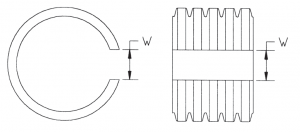
• Cut one section of the pipe with a length of five waves in the middle of the undulating valley.
• Using a saw, remove the pipe wall strips from the short pieces of pipe (Figure 3). Note: The width of the strip depends on the size of the pipe. See Table 3 for the recommended width.
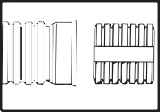
Figure 3: Installation Stub

Merging pipes of different types and sizes
Drainage systems often involve pipes
connectors of various materials or sizes.
The choice to make this transition is often
limited by the quality of the connection required.
One very common method for
connecting various types of pipes with
the same size, and in some cases different sizes, is through the use of concrete collars. This generally provides a minimum silt-tight connection quality but the quality produced ultimately depends on the workmanship.
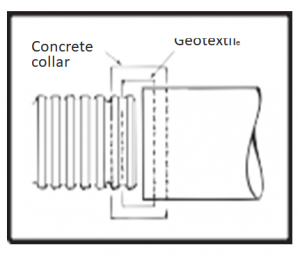
The concrete collar is formed by joining the two ends of the pipe with
meeting, wrapping the junction with geotextiles for
prevent most of the soil and concrete, and then
pouring a concrete collar that covers both ends of the pipe.
Another option might be to use fittings or adapters that are specifically designed for this application. Available fitting options are designed to make the transition from one material to another. In other cases fittings may need to be used in combination with other manufacturers’ gaskets or couplers to complete the transition. Transitions made in this way can provide a higher performance connection than concrete collars.

