by

APPLICATION OF PP-R COMPOSITE REINFORCED PIPES IN HOT AND COLD WATER SYSTEMS

Lei Wang, Guozhi Xu, Qiaoping Qiu, Weihua Lu, Yanwang Han

# 2021 Amsterdam

PP-R (random copolymerized polypropylene) has been widely used in hot and cold water systems. However, the standard PP-R pipes have the disadvantages of a large high-temperature thermal expansion coefficient, an insufficient notched impact strength, and a low temperature and pressure resistance.

In this paper, a new material is used to reinforce PP-R. Basalt, which has been widely used in the industry, can greatly improve the mechanical properties of PP-R and PP- RCT pipes. The mechanical strength has been improved by around 20%. In addition, using basalt in the fiber-reinforced PP-R composite pipe with multi-layer coextrusion, allows to reduce the linear expansion coefficient from 0.16 mm / (m · °C) to 0.05 mm / (m · °C), and the longitudinal reversion from 2% down to 0.3%. The Basalt fiber-reinforced PP-RCT composite pipe can withstand temperatures 15-20°C higher on the long term, making the pipe more versatile for hot and cold water systems. Furthermore, an antibacterial PP-R composite pipe was developed, which inhibits the metabolism , reproduction and accumulation of bacteria inside the pipe. These features provide cleanliness and safety for residents using the drinking water.

Article source: https://www.pe100plus.com/PPCA/APPLICATION-OF-PP-R-COMPOSITE-REINFORCED-PIPES-IN-HOT-AND-COLD-WATER-SYSTEMS-p1768.html
by

DEVELOPMENTS IN NORTH AMERICAN CONDUIT PRACTICES

Tom Stewart, Richard Hicks, Patrick Vibien, Lance MacNevin

# 2021 Amsterdam

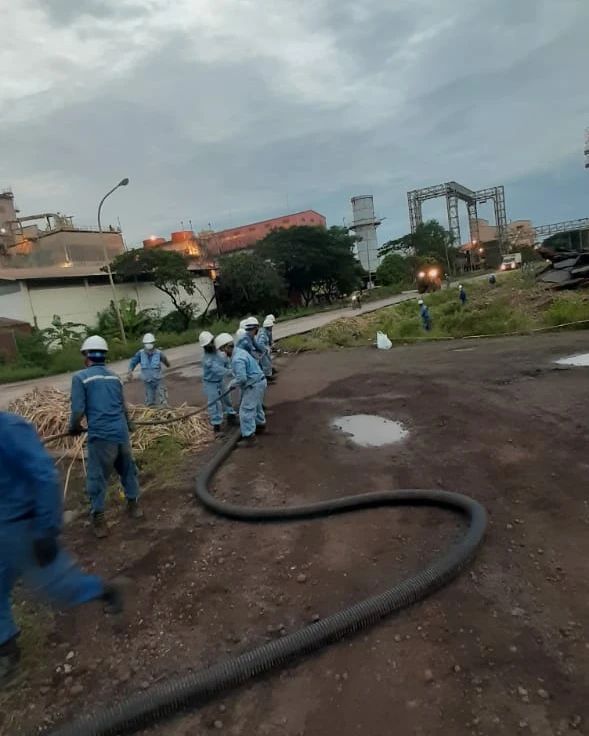
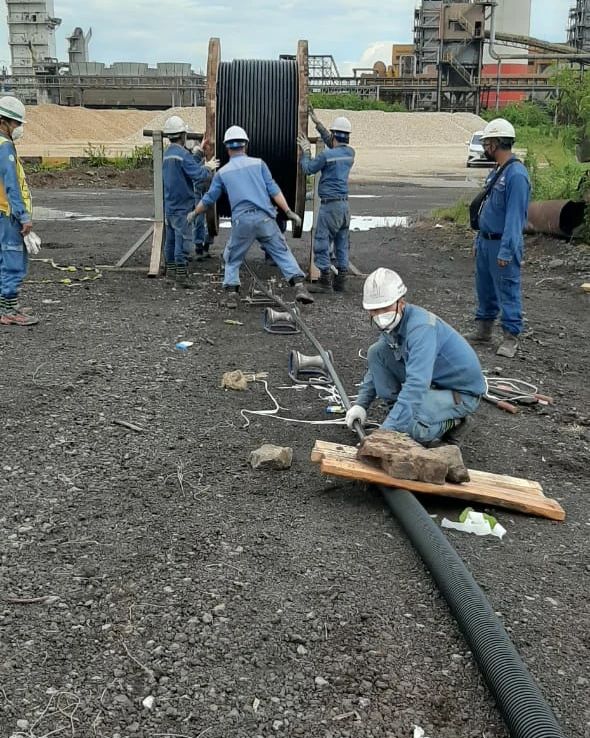
Arguably, broadband technologies have become as vital to society as water delivery, waste removal and energy distribution. However, the role of plastic conduit in broadband is often overlooked within the piping industry and society in general. HDPE conduit is an essential component to the build -out of 5G cell networks, IoT, and Industry 4.0. Plastic conduit, or duct, is the primary pathway for installing and protecting buried cables. These cables are used for delivering broadband communications and electricity, and HDPE conduit, in particular, provides the capability for long uninterrupted distances to link cities, buildings, and data centers. HDPE conduit is used for electricity delivery, fiber-optic telecommunications, cable television (CATV), Supervisory Control and Data Acquisition (SCADA), Intelligent Transport Systems (ITS), Fiber-To-The-Home (FTTH), among other applications. The explosive growth in the broadband infrastructure means that the quality of today’s installations will have ramifications for future generations. Industry efforts in the past 10 years, through research and delivery of technical information and education about products, design methods, and installat ion techniques, have led to the increase in the usage of HDPE conduit and duct in North America. This paper will provide an overview of the US conduit products/market segments and focuses on past and future work, highlighting available industry resources and developments in products. This paper will also present current practices to address design, installation, safety, standards, and sustainability challenges.

aricle sources: https://www.pe100plus.com/PPCA/DEVELOPMENTS-IN-NORTH-AMERICAN-CONDUIT-PRACTICES-p1796.html

by

FINDING THE RIGHT PIPE TEST FOR POLYETHYLENE WITH RAISED RESISTANCE TO SLOW CRACK GROWTH

Ernst van der Stok

# 2021 Amsterdam

For PE 100-RC, two tests are still under development for pipes: the point load test (PLT) and the accelerated notch pipe test (aNPT). The PLT was developed by a project group consisting of manufacturers and end users. The PLT determines the resistance to point loads as they can occur in practice. An earlier study showed that the average lifespan of PE 50 pipes under point loading can be estimated fairly accurately. A new study has determined that large scale failures in second-generation PE pipes due to point loads are not likely to occur in the coming decades. In another study, the results for the PLT were promising but a clear comparison between the three different laboratories and a conclusion regarding the right detergent for proper acceleration of the test was lacking. In a new study, three different laboratories tested PE 100 pipe material from two manufacturers with Arkopal N100. These pipes were also used to experiment with new detergents to accelerate the test. The results of the investigations will be used for the new PLT standard (ISO/CD 22102) and the revision of PE pipe standards such as EN 1555 and ISO 4437. In the aNPT, the crack growth resistance from an initial notch is measured. This test is performed in exactly the same way as in the standard NPT (ISO 13479), but with one important difference: instead of using water, the pipe is placed in a detergent solution. To keep the test eco-friendly, the amount of detergent is minimized by creating small containers for each individual pipe. This test method is currently being standardized as an annex to ISO 13479. A round robin investigation was therefore initiated.

article sources: https://www.pe100plus.com/PPCA/FINDING-THE-RIGHT-PIPE-TEST-FOR-POLYETHYLENE-WITH-RAISED-RESISTANCE-TO-SLOW-CRACK-GROWTH-p1736.html

by

A METHODOLOGY TO DETERMINE CHARPY IMPACT STRENGTH OF NOTHCED SPECIMEN CUT FROM PLASTICS PIPES

Li, Yanjun, Xiang, Aimin, Xu, HaiyunBeijing, Xie, Jianling, Ho, Kinman, Xu, HaiyunBeijing

# 2021 Amsterdam

It is necessary to evaluate the impact resistance of plastics pipes as they have the potential to be damaged by hitting or colliding during storage, transportation and installation. As a well-established test method, the Charpy impact strength of unnotched test pieces cut from thermoplastics pipes is determined according to ISO 9854-1/2:1994. In the current method, the result is expressed as the incidence of broken test pieces when a specified number of test pieces have been struck. Since most specimens are not broken and the actual impact strength cannot be obtained under the test conditions, there is no significant difference found on the impact strength among various plastics pipes materials. This paper introduces a new approach in which notched test pieces sampled from plastics pipes are used to assess the impact performance of plastics pipes basing on ISO 179-1:2010 and ISO 9854- 1/2:1994. Preliminary test results indicate that the method offers a more effective means (quantitative) to determine the actual impact strength of various plastics pipes. Furthermore, the impact resistances of various pipes materials are clearly distinguishable. The test results offer reference data for improving plastic pipe production and selection of plastic materials. Total 12 participants from 4 countries, including China, Germany, Korea and Thailand, took part in the round robin test and 143 test results were submitted in all. Total 13 groups of pipes were used to make the specimens, including 4 groups of PE pipes of 4 sizes (dn113 × 11.2mm, dn113 × 7.8mm, dn88 × 9.4mm and dn60.5 × 5.9mm), 7 groups of PP pipes of 3 sizes (dn32 × 3.6mm, dn25 × 3.5 and dn25 × 2.3mm) and 2 groups of PVC-U pipes of 2 sizes (dn160 × 9.5 and dn110 × 3.2mm).

https://www.pe100plus.com/PPCA/A-METHODOLOGY-TO-DETERMINE-CHARPY-IMPACT-STRENGTH-OF-NOTHCED-SPECIMEN-CUT-FROM-PLASTICS-PIPES-p1786.html

by

FULL SCALE EVALUATION OF THE CORE TUBES GROUT INJECTION METHOD FOR LARGE DIAMETER HDPE OFFSHORE PIPELINES SINKING

Mehdi Jalili, Maziar Neyshabouri, Ashkan Nasrollahi

# 2021 Amsterdam

Seawater intake/outfall systems in nine lines with 1400/2200 m length and large diameter polyethylene pipelines (O.D. 2700 mm dia.) had been designed and fabricated to supply 4,200,000 cubic meters per day seawater into a basin in northern coast of Persian Gulf, Bandar Abbas/IRAN. The usual sinking by additional concrete ballasts had been considered for installation of the pipelines in basic engineering phase. During the detailed installation engineering an alternative method considered which was grouting the core tubes in the pipe wall instead of the use of the concrete ballasts. This novel method evaluated by performing two bending tests on 30 m strings. Based on the tests results, grouting the core tubes has no significant effect on the initial deformation of the strings under pipe’s own weight in comparison to the situation of the Non-grouted pipes with concrete ballasts. Furthermore, it could be predicted that the grouting would have no significant effect on the pipe string’s stiffness in the sinking conditions that string will experience a great deformation. The bend radius ratio to the pipe diameter obtained 32 and 34 for the Grouted and Non-Grouted pipes, respectively, and no defect have been observed in both strings. Therefore, no difference would be observed regarding the bending behavior of the grouted pipes in comparison to the non-grouted pipes. The pipeline installation with using the grout injection in the pipes has been done successfully in the project and it could be recommended as the lessons learned for similar projects which PE pipes will be installed in shallow water conditions, considering advantages such as uniformly weighted pipe, no local loading exerted by ballasting weights, faster construction, and decrease the possibility of free spanning occurrence.

articles source :  https://www.pe100plus.com/PPCA/FULL-SCALE-EVALUATION-OF-THE-CORE-TUBES-GROUT-INJECTION-METHOD-FOR-LARGE-DIAMETER-HDPE-OFFSHORE-PIPELINES-SINKING-p1742.html

Switch The Language
    × Contact Us!

    PT SHUANGLIN PIPE INDONESIA is a joint venture subsidiary of Zhejiang Shuanglin Environment Co., Ltd. Our factory is located in CIKARANG, Indonesia. The plant covers an area of 4,000 square meters. Our company has introduced advanced production line and a professional production management team. The company mainly produces municipal and residential building water supply and drainage, sewage pipes and complete sets of systems. The product line includes HDPE/PP double-wall corrugated pipe and inspection wells for pipeline connection and other accessories.

    ADDRESS

    KAWASAN INDUSTRI DELTA SILICON 5 JL.KENARI BLOCK G.1 NO.28A-B LIPPO CIKARANG CIBATU CIKARANG SELATAN KAB BEKASI JAWA BARAT

    ADDRESS

    PT SHUANGLIN PIPE INDONESIA
    (NEW PLANT KITIC)
    Jl. Anggrek VII, Kavling No.26 Kawasan Industri Terpadu Indonesia China (KITIC ) Deltamas, Desa Nagasari. Kec. Serang Baru. Kabupaten Bekasi. Jawa Barat 17330

    PHONE

    (021) 89915151

    EMAIL

    info@shuanglinpipe.co.id