
 English
 Chinese (Simplified)
 Indonesian
 Japanese
by admin
- Home
- Blog – Full Width
April 18, 2022
by admin
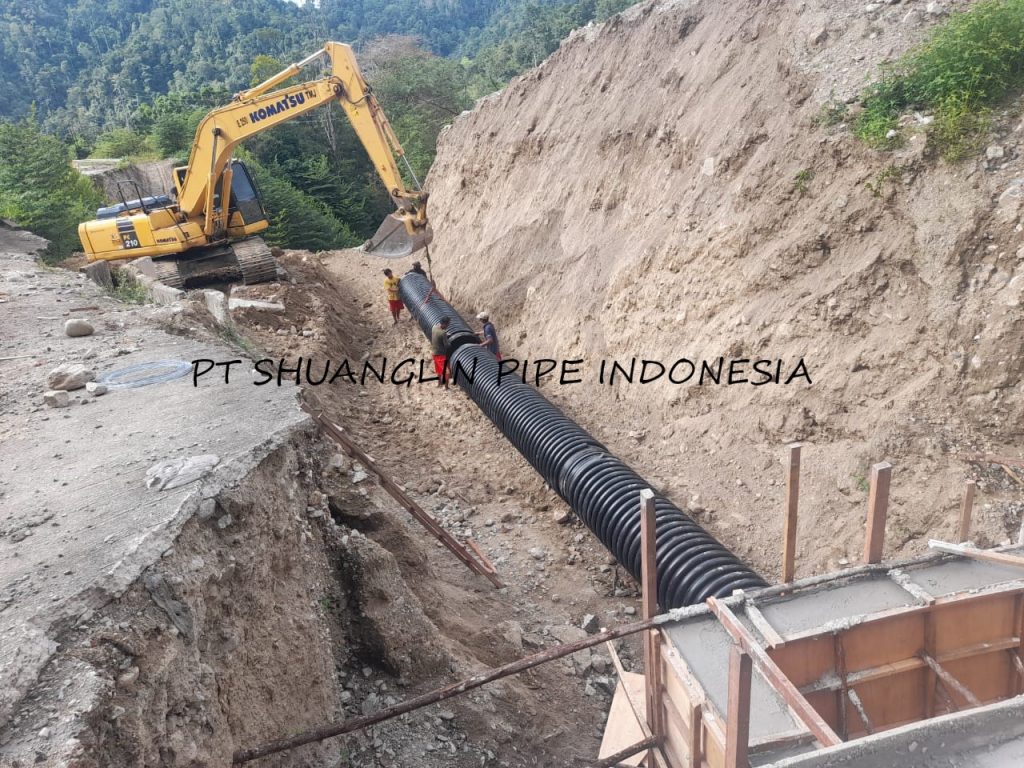
DESIGN OF LARGE DIAMETER BURIED PIPES
Anders Andtbacka, Peter Sejersen
# 2021 Amsterdam
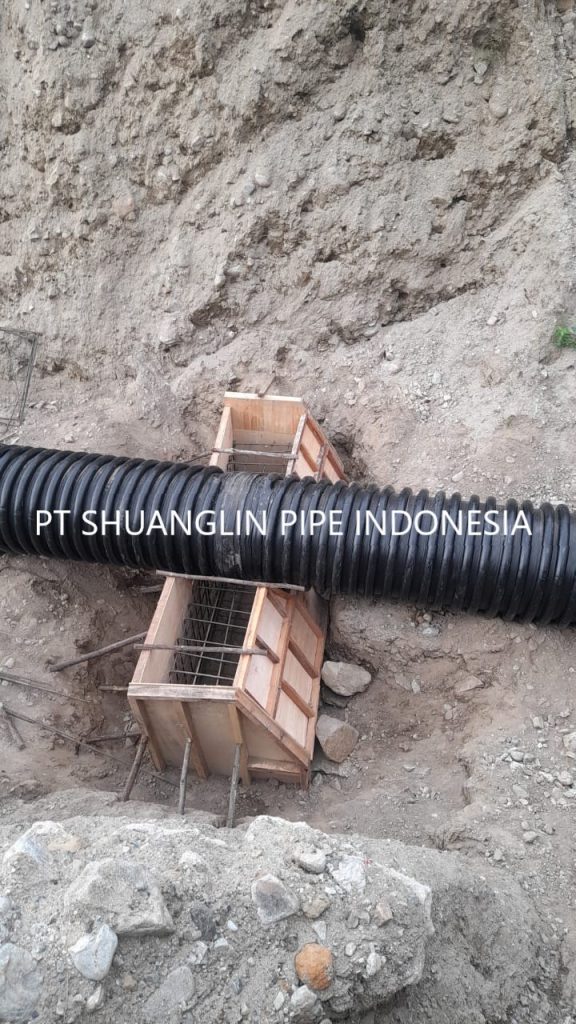
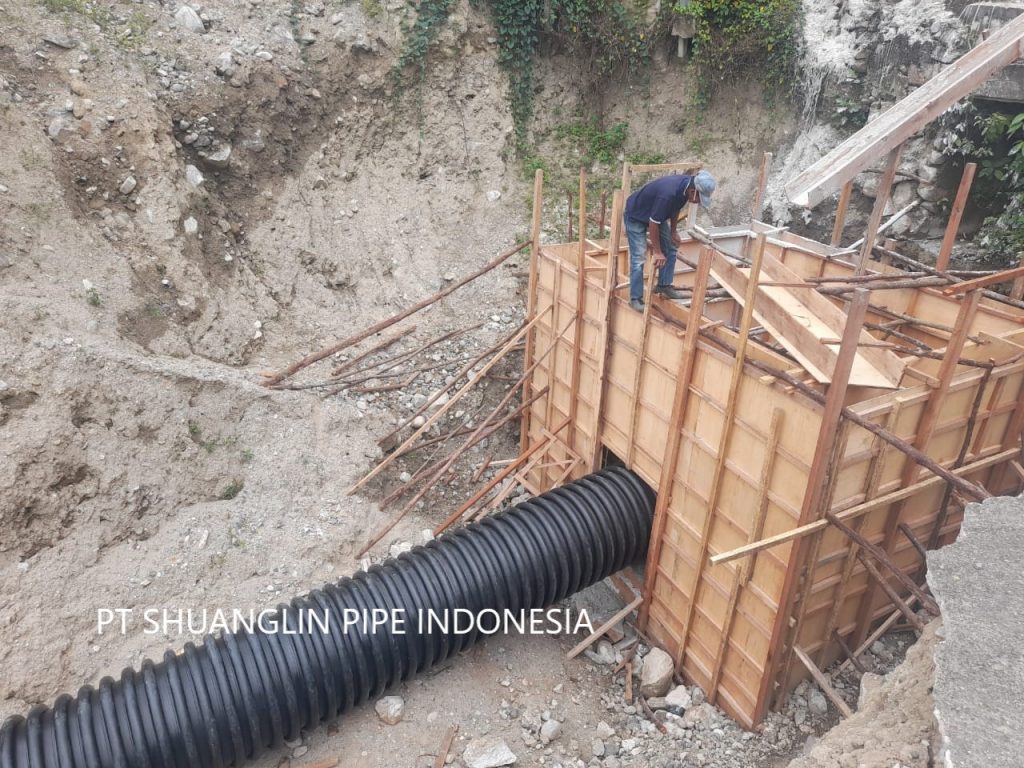
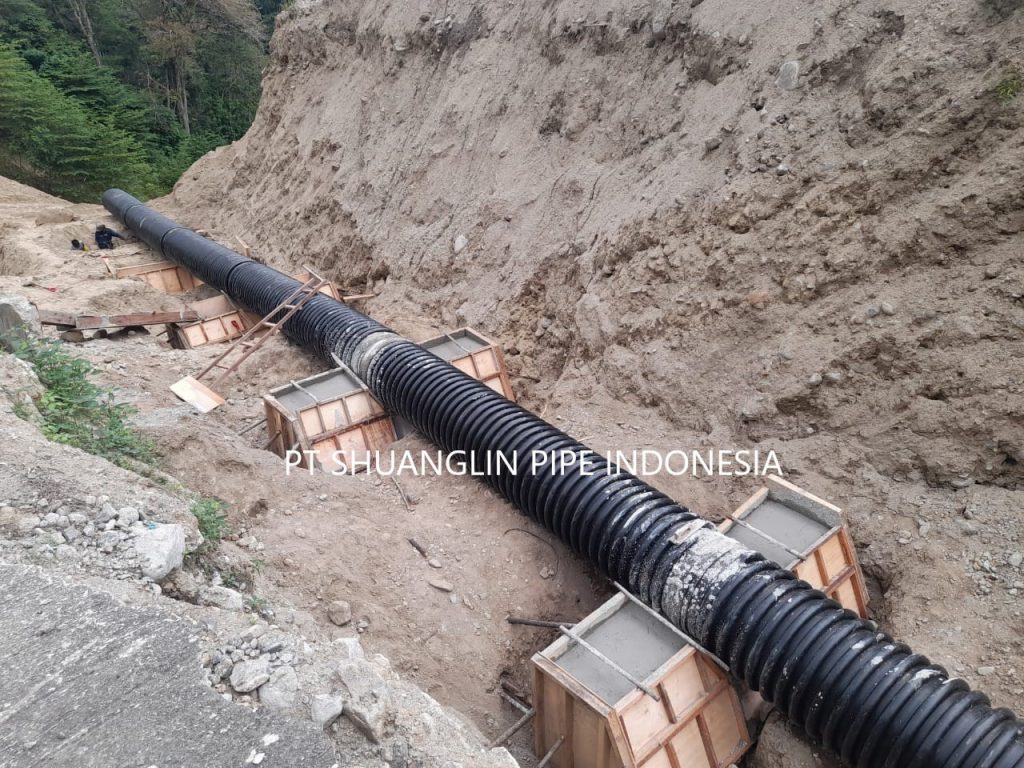
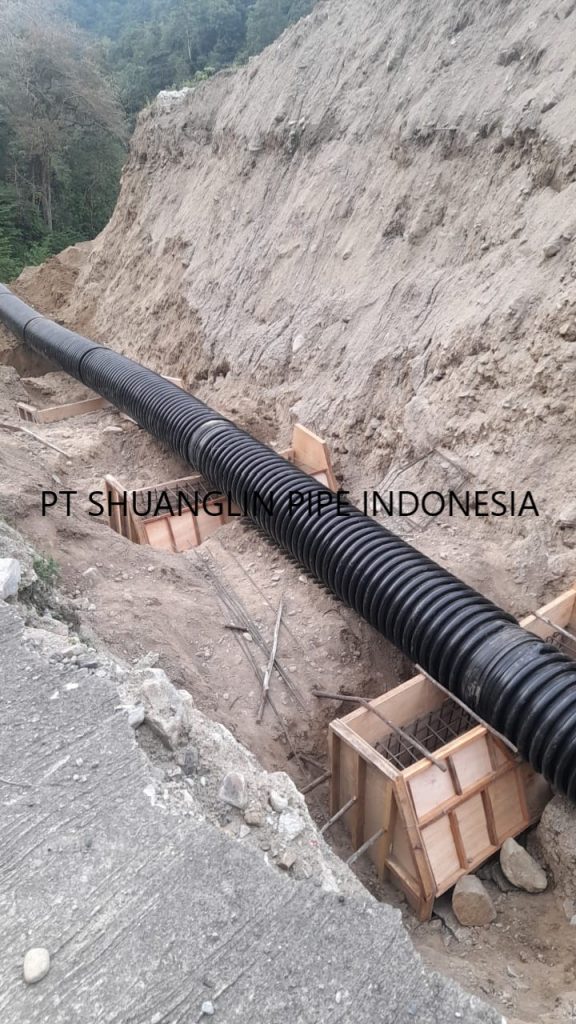
In the late nineties a study of the behavior of buried thermoplastics pipes was carried out. The project had input and participants from both the plastic pipe industry as well as from external organizations. Six external leading experts in the field of pipeline design, not necessarily plastics pipes design, have been involved as consultants in the project. The experimental work included a number of less ideal installation circumstances, in order to fully understand where the border line of safe installations is. A report that summarized the experimental work carried out was issued including an analysis of the pipe soil interaction process as it was monitored during the study. Next to that, a simple design graph explaining the short and long-term deflection as a function of the pipe stiffness class and the quality of the installation. The results have been presented at the plastic pipe conference as well as it is being used in standardization work, e.g. in developing CEN TS 15223, “Validated design parameters of buried thermoplastics piping systems”. Although the physical rules stay the same the world has changed. The need for watertight solutions in large diameter sewer pipes has given plastic pipe solutions a significant increase in market share in Europe, very well supported by the introduction ofthe EN 13476 standard which describes a number of different ways to design and produce a structures wall pipe. TEPPFA has therefore decided to extend that Buried Pipe Study by adding field tests and measurements of large diameter structured wall pipes in order to enhance the scope. A test field in Denmark has been used and SN2 and SN4 PE pipes according to EN13476 have been installed under “Good”, “Moderate” and “Poor” conditions. The soil used has been poorly grated sand and silt mixture which allows the poor installation. Cover depth is one meter. The deflection has been measured after assembly but before backfilling, after backfilling up to the crown, after completion and after 3 weeks, three months and eighteen months. Other test installation in Finland and Sweden has been included in the project, all of them affected by severe traffic load. The conclusions of the studies have resulted in confirmation of the validity of the TEPPFA graph for large diameter pipes: pipes up to 3000mm in diameter. Furthermore, a new calculation tool has been launched. This tool can be used when the installation parameters are outside the scope of the established parameters.
article source: https://www.pe100plus.com/PPCA/DESIGN-OF-LARGE-DIAMETER-BURIED-PIPES-p1741.html
April 11, 2022
by admin
CONCEPT TO STANDARD – HOW RECYCLED MATERIAL WAS EFFECTIVELY ADDED TO U.S. STANDARDS FOR CORRUGATED HDPE PIPE
Daniel Currence, Michael Plumier
# 2021 Amsterdam
Over a ten-year period, the North American corrugated plastic pipe industry successfully demonstrated that post-consumer and post-industrial recycled materials could be responsibly incorporated into corrugated pipes used for drainage applications. Prior to this work, the material standards were established for manufacturing using only virgin HDPE resin. The end result has been an expanded opportunity for corrugated HDPE pipe producers to utilize post-consumer recycled plastic and to feature a strong message on the sustainability of their product.
This paper will describe the process used to enact this successful transition, from concept to published standard. Included in this review will be:
1.Factors that drove owners/agencies toward the initial research
2.How the scope of initial research on material testing was identified and funded;
3.How results from the initial materials research led to extended lab and field research;
4.Identifying key material testing needs and establishing standard test methods;
5.Key decisions reached by the industry leading to a proposed material standard for pipe produced with recycled content;
6.Overcoming objections from within plastic pipe industry and from the concrete pipe industry;
7.Reaching consensus among US DOT representatives to pass a major standard revision;
8.Establishing quality assurance parameters;
9.Transitioning and implementing the new standard into practice; and
10.Industry initiatives to promote the new standards.
This process was specifically beneficial to the North American corrugated plastic pipe industry in its quest to use recycle materials in public right-of-way drainage applications. On a broader scale, it serves as guidance to navigate the 10-years’ worth of research, identifies key aspects to consider and helps other countries address the ever-increasing discarded plastic throughout all parts of the globe. Regardless of the change being pursued or the standards body that must be engaged, the ten steps described are likely to be very similar around world.
article sorurce: https://www.pe100plus.com/PPCA/CONCEPT-TO-STANDARD-HOW-RECYCLED-MATERIAL-WAS-EFFECTIVELY-ADDED-TO-U-S-STANDARDS-FOR-CORRUGATED-HDPE-PIPE-p1807.html
April 4, 2022
by admin
FIRST USE OF PE100-HT CONDUITS FOR ADVANCING THE CONTAINMENT OF UNDERGROUND HIGH VOLTAGE CABLES
Dr. Holger Brüning, Serge Hascoët, Yann Delanne, Didier Nozahic, Jawdat Mansour, José Santana
# 2021 Amsterdam
RTE operates, maintains and develops the French electricity network, including the High and very High Voltage cable lines. Their network is the largest in Europe and includes over 6400 km of underground HV links operated in 2018. The company is modernizing and developing its network by investing 1.5 billion euros per year between 2015 and 2024. Most of this network study, supply and installation work will be undertaken by companies selected through the Official Journal of the European Union qualification systems. The relatively recent establishment of underground cable lines in rural areas has contributed to the increase in the number of RTE ‘s long (over 20 km) underground High Voltage cable lines. This has generated a strong demand for high quality HDPE conduit pipes that can ensure a safer installation and the containment of a possible cable defect. The increase in the use of HDPE conduits has been supported by the development of a new generation of “PE100-HT” (High Temperature) black compounds developed for use at high operating temperatures and which have been tested at temperatures of up to 110°C. Extrapolation of the ISO9080 [1] regression curves, provided by the resin manufacturer, show that such materials can have a service life in excess of 50 years at temperatures of 60°C as compared to only 6 years for a conventional PE100. The performance of this new material was evaluated and incorporated into Group 5 of the French NF114 Quality Mark [2], a quality system of PE Pipe systems under the governance of an administrating laboratory. PE100-HT conduit pipes are proposed for new RTE high operating temperature projects. The first RTE project for which PE100-HT conduits were selected was IFA2, the interconnection between France and the United Kingdom. This project involved undersea and underground high voltage direct current cable lines between the two countries. Prysmian Power Link was awarded the supply and installation contract for the cables. A critical point was the transition length between subsea and conventional underground buried conditions, where operating temperatures can reach 70°C. PE100-HT conduit pipes were selected to ensure that these critical conduits would have a long operational life. The ‘landing’ was carried out in 2019 with 1500 m of 560mm OD conduit pipes being installed by horizontal directional drilling.
articles soource: https://www.pe100plus.com/PPCA/FIRST-USE-OF-PE100-HT-CONDUITS-FOR-ADVANCING-THE-CONTAINMENT-OF-UNDERGROUND-HIGH-VOLTAGE-CABLES-p1776.html
Maret 28, 2022
by admin
DEVELOPMENT OF A RAPID AND INNOVATIVE IN-FACTORY PROCEDURE FOR TESTING THE PERFORMANCES OF PE PIPES CONTAINING VARIOUS PROPORTIONS OF RECYCLED POLYMER MATERIAL
Dominique GUEUGNAUT, Pascal AUSSANT, Romuald BOUAFFRE, Myriam BECHROURI# 2021 Amsterdam
Concerns regarding the environment and sustainable development have revived interest in the reprocessing and re-use of polymer materials from manufactured objects that have reached the end of their operating life. Within this framework, formal professional agreements have been put in place at global level under the aegis of both the producers of plastic raw materials and the product manufacturers. Apart from the problem of the physicochemical compatibility of the polymers that are destined to be mixed – a problem which requires the implementation of methods for accurately characterizing the polymers prior to the manufacture of the pipes and fittings – it is also important to be able to precisely fix the respective quantities of the various constituents of the mix in order to ensure the desired performances. This paper presents a rapid and innovative procedure for testing PE100 pipes containing various proportions of recycled polyolefins. Thus, a limited number of relevant and complementary techniques were implemented, while keeping in mind the requirement that they be usablein a continuous and routine manner by the manufacturers of PE pipes and/or fittings. The main objective of the study was to correlate the responses of the various techniques that were applied to a set of standard polymer mixes produced under controlled conditions. The polymer mixes were PE100-based materials with different concentrations of recycled PE100/PP blends. One of the techniques employed, the well-known Stepwise Isothermal Segregation technique, which had previously been successfully used for the accurate characterization of PEs was specially adapted so as to cover a sufficiently broad range of mixes, including those already available and those that might be developed in the future. This technique, coupled with viscometric analysis which was also adapted to the range of mixes studied, allowed determining the signatures of the various mixes. In parallel with this analysis, pipes made from different mixes were subjected to hydraulic pressure testing at two stress levels corresponding to the demands of their intended use. The performances of the pipes under pressure are fairly correlated to the physicochemical parameters of the mixes as for instance the High Load Melt flow Index and the ratios of the crystallization enthalpies. Such correlation allows fixing the proportions of recycled PE100/PP material that must not be exceeded so that the mix PE100-recycled PE100/PP conserves the required performances in terms of the intended application. The overall methodology constitutes a good basis for further analysis of various PE-recycled PE-PP mixes.
article source : https://www.pe100plus.com/PPCA/DEVELOPMENT-OF-A-RAPID-AND-INNOVATIVE-IN-FACTORY-PROCEDURE-FOR-TESTING-THE-PERFORMANCES-OF-PE-PIPES-CONTAINING-VARIOUS-PROPORTIONS-OF-RECYCLED-POLYMER-MATERIAL-p1763.html
Maret 21, 2022
by admin
RECENT DEVELOPMENT OF CHINA PE WATER PIPE STANDARDIZATION AND ITS INFLUENCE ON THE APPLICATION OF PE100 PRE-COMPOUND
Xinwen Yu, Aimin Xiang, Dongyu Fang, Peck Tze Kang, Jinghui Li
# 2021 Amsterdam
The Chinese PE water pipe market has developed significantly in recent years and particularly over the last 12 months. Against a background of water scarcity and growing urbanization, this evolving market has grown significantly in both size and quality awareness. On the back of past experiences, a fundamental change occurred on July 1, 2018 with the introduction of the updated national standard of GB/T 13663-2017 “Polyethylene (PE) piping systems for water supply” that requires the use of pre- compounded PE materials for water distribution pipelines. This quality awareness was prompted by the realization that certain water supply pipelines were made of low quality materials (eg. recycled material, substandard materials that may not meet standard requirement, or process under inadequate dispersion of CB) that resulted in significant water losses and endangered water safety issues. The release of the updated PE water pipe standard will have a significant impact on the development of the China PE water pipe market. It will start to change the incorrect perception that high quality PE100 pre-compounds are needed for the gas market but low quality PE material would suffice for the water pipe market.
In this paper, the authors will review the full development of the Chinese PE water pipe application and its market. The new China PE water pipe standard will be evaluated against internatio nal standards from both an application and technical perspective. Successful cases of pre-compound PE100 material being used in the Chinese water pipe market will be introduced. Finally, the authors will highlight the needs of the Chinese PE water pipe market and its future development.
Articles source : https://www.pe100plus.com/PPCA/RECENT-DEVELOPMENT-OF-CHINA-PE-WATER-PIPE-STANDARDIZATION-AND-ITS-INFLUENCE-ON-THE-APPLICATION-OF-PE100-PRE-COMPOUND-p1762.html
