by

USABILITY OF THE STRAIN HARDENING TEST AS A COMPONENT TEST FOR POLYETHYLENE PIPES

Britta Gerets, Mirko Wenzel, Kurt Engelsing

# 2021 Amsterdam

The strain hardening test (SHT, ISO 18488 [1]) becomes increasingly important for the characterization of high-density polyethylene (HDPE) grades and pipes made thereof. With regard to small pipe diameters, a smaller test specimen than the one defined in ISO 18488 has been developed. SHT results were demonstrated to remain unchanged as long as the applied strain rate stays constant. With a succession of sawing, milling, grinding and finally punching, a procedure to extract specimens from pipes was developed. [2] In further work the procedure was optimized: Thin films, from which dogbone specimen can be punched directly, were generated on a lathe. This provides the additional benefit that specimens can also be extracted in circumferential direction. A variety of different HDPE pipe grades and pipe dimensions were tested and the SHT results were put in relation to those from material tests according to ISO 18488. Although the same material batch was used in both cases, differences between material and pipe test results were observed. [3] Therefore, the influences of pipe dimension and the pipe extrusion process were studied. Especially molecular orientation revealed a great impact on the SHT results.

https://www.pe100plus.com/PPCA/USABILITY-OF-THE-STRAIN-HARDENING-TEST-AS-A-COMPONENT-TEST-FOR-POLYETHYLENE-PIPES-p1754.html


by

GROWTH IN THE USE OF POLYETHYLENE PIPES IN MEA FOR NATURAL GAS UTILITY DISTRIBUTION

Sultan Alkendi, Mohamed Jaber, Ahed Atef Helal

# 2021 Amsterdam

The current push to reduce governmental energy subsidies has moved the need to adapt utility gas distribution networks toward the top of Middle Eastern governmental near-term agendas. Egypt is at the forefront of this push towards gasification. The United Arab Emirates has started on the path towards gasification with large-scale projects underway, and the Kingdom of Saudi Arabia will be quick to follow. This has presented opportunities for the regional plastic pipe industry, as well as some challenges specific to the use of plastic pipes in the region.

The specification of colored pre-compounded pipes and fittings, manufactured using PE100+ listed materials for natural gas utility distribution in Emirate of Abu Dhabi by the Abu Dhabi Quality and Conformity Council, QCC, has greatly elevated the quality requirements of plastic pipes used in this gasification effort. The specification of PE100 and PE80 pipes and fittings for natural gas utility distribution networks will also help future growth in this industry regionally. National standards and specifications have not yet been put into place, utilities rely on international standards, including ISO, GIS, and industrial standards.

The major challenge faced by gas utilities when using plastic pipes, PE100, for natural gas utility distribution in the region is high ground temperatures. International standards define de-rating factors for elevated ground temperatures. As per Abu Dhabi National Oil Company for Distribution, ADNOC Distribution, specifications MOP is typically reduced to 4 barg (refer to Table 2) to maintain a design life time of 50 years [1]. This de-rating limits the operating pressures of gas distribution networks, therefore limiting the technical and economic value that plastic pipes can add to the utilities’ gas network.

https://www.pe100plus.com/PPCA/GROWTH-IN-THE-USE-OF-POLYETHYLENE-PIPES-IN-MEA-FOR-NATURAL-GAS-UTILITY-DISTRIBUTION-p1773.html


by

PIPE FOR FIRE EXTINGISHING DEVICE

Yoshikatsu NISHIDA, Yukihisa YAMADA, Masaya IWASAKI, Masaru TOMOBE, Yuichi KOUGA

# 2021 Amsterdam

By using polyethylene as the main material for this fire extinguishing device pipe, a resin-made fire extinguishing device is developed that is maintenance-free for eight years and can cope with the abnormal heat generation of lithium ion batteries. In order to prevent the internal extinguishant from permeating and being lost during long-term use, the pipe structure for this fire extinguishing device was made to be a multi-layer structure (PE80/AD *1 /EVOH/AD *1 /PE80). And, by forming the fire extinguishing device into the shape of the pipe, the extinguishant opening was formed into a beak-like shape to allow the evaporated extinguishant can be diffused widely. One of the examination item of Underwriters Laboratories Inc. (hereinafter referred to as a “UL”) demands that the amount of permeation of fire extinguishing agent is as small as the weight change of a metal container. This fire extinguishing device pipe is caused by moisture a much greater weight change than ordinary polyethylene pipes. As such this fire extinguishing device has been certified due to be proved the relationship between the permeation of extinguishing agent and the change in weight. As a result of the above, this fire extinguishing device was the first self-contained automatic extinguisher unit in the world to obtain UL certification. (UL No. EX26912) *1 ‘’AD’’ stands for the adhesive layer.

https://www.pe100plus.com/PPCA/PIPE-FOR-FIRE-EXTINGISHING-DEVICE-p1758.html

by

FIELD TEST OF GLASS FIBER REINFORCED POLYEHYLENE PIPE SYSTEM AT SOFTEN GROUND

Mitsuaki Tokiyoshi, Gentaro Takahara, Joji Hinobayashi, Toshinori Kawabata, Takashi Kuriyama

Papers # 2018 Las-Vegas

Glass fiber reinforced polyethylene pipes and fittings are controlled for bending characteristics (Strength and stiffness) for vertical and axial directions of pipe by spiral cross winding method. Generally, to use this method, it takes much stronger for vertical strength than axials cause of extruded direction, besides it’s more stable of ovality for large diameter pipes. It is expected to use pressure pipes for large diameter pipeline with thermoplastic welding method easier.

Here is shown the experience of field test for soften ground located in Hokkaido ,Japan used 600mm DN/ID (SIDR35), total length is 33mm with electrofusion and butt welding joint. These pipes and joints indicate to keep the shape of pipe by the cross section against to adjust for axial followed behavior on the soften ground.

https://www.pe100plus.com/PPCA/Field-test-of-Glass-fiber-reinforced-polyethylene-pipe-system-at-soften-ground-p1719.html

by

Development Of Large Diameter Continuous Fiber Reinforced Thermoplastic Pipe

Fengliang Jiang, Nian Wu

Papers # 2018 Las-Vegas

This article discusses the development of the technique in producing large-diameter, medium-and-lowpressure water-delivery pipes. The continuous fiber-reinforced thermoplastic tapes perfectlyimpregnated with thermoplastic resin are wound layer by layer to form three-layer fibre reinforced polyethylene(PE) composite pipe (CGFR-PE) with inner and outer polyethylene layers as the protective functional layer and the middle continuous fiber glass belt as the reinforcing layer. There are stiffening rib designed in the outer layer to be used for bell-and-spigot joint.

The large-diameter (>1000mm) medium and low-pressure (0.4-1.6Mpa) water delivery pipe market is very attractive for plastic pipes. Compared with the traditional thermoplastic solid-wall pipe, the continuous glass fibre reinforced polyethylene(PE) composite pipe (CGFR-PE) has its significant advantages of technical and economic indicators below: Stable and reliable performance, environmental protection and energy saving, high pressure bearing capacity, convenient and reliable socket connection, low production cost and the like, which has a good market prospect in this field. This text introduces the structural design, strength calculation, connection technology, production technology and equipment of the glass fibre reinforced PE pipe, etc. The speciallydesigned multi-station winding device and the socket online finishing device are all our patented technology-friendly products. This will also help greatly improve the production efficiency, and ensure the overall consistent performance of the pipe wall and make the socket connection more reliable. For the reason that it is very difficult to detect the pressure-resistant properties of large-diameter composite pipes by exerting hydrostatic tests. Therefore, this text mainly discusses how to test the ‘initial apparent radial strength’ and the ‘initial apparent axial strength’ by means of the ‘Split Disc Method’ (ASTM D 2290), instead of the traditional hydrostatic test (ISO 4427). This text also explores a test scheme for detecting the long-term reliability of composite pipe by means of the Split Disc Method.

https://www.pe100plus.com/PPCA/Development-of-large-diameter-continuous-fiber-Reinforced-thermoplastic-pipe-p1720.html

Switch The Language
    × Contact Us!

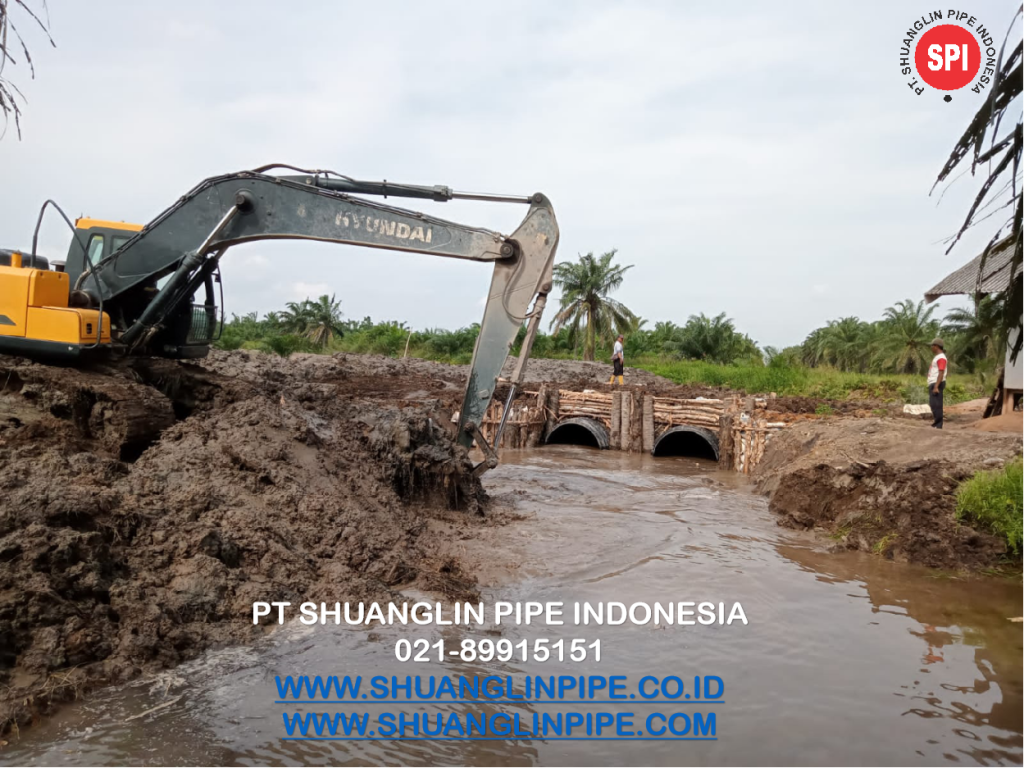
    PT SHUANGLIN PIPE INDONESIA is a joint venture subsidiary of Zhejiang Shuanglin Environment Co., Ltd. Our factory is located in CIKARANG, Indonesia. The plant covers an area of 4,000 square meters. Our company has introduced advanced production line and a professional production management team. The company mainly produces municipal and residential building water supply and drainage, sewage pipes and complete sets of systems. The product line includes HDPE/PP double-wall corrugated pipe and inspection wells for pipeline connection and other accessories.

    ADDRESS

    KAWASAN INDUSTRI DELTA SILICON 5 JL.KENARI BLOCK G.1 NO.28A-B LIPPO CIKARANG CIBATU CIKARANG SELATAN KAB BEKASI JAWA BARAT

    ADDRESS

    PT SHUANGLIN PIPE INDONESIA
    (NEW PLANT KITIC)
    Jl. Anggrek VII, Kavling No.26 Kawasan Industri Terpadu Indonesia China (KITIC ) Deltamas, Desa Nagasari. Kec. Serang Baru. Kabupaten Bekasi. Jawa Barat 17330

    PHONE

    (021) 89915151

    EMAIL

    info@shuanglinpipe.co.id