
 English
 Chinese (Simplified)
 Indonesian
 Japanese
by admin
Januari 10, 2022
by admin
CONCEPT TO STANDARD – HOW RECYCLED MATERIAL WAS EFFECTIVELY ADDED TO U.S. STANDARDS FOR CORRUGATED HDPE PIPE
Daniel Currence, Michael Plumier
# 2021 Amsterdam
Over a ten-year period, the North American corrugated plastic pipe industry successfully demonstrated that post-consumer and post-industrial recycled materials could be responsibly incorporated into corrugated pipes used for drainage applications. Prior to this work, the material standards were established for manufacturing using only virgin HDPE resin. The end result has been an expanded opportunity for corrugated HDPE pipe producers to utilize post-consumer recycled plastic and to feature a strong message on the sustainability of their product.
This paper will describe the process used to enact this successful transition, from concept to published standard. Included in this review will be:
1.Factors that drove owners/agencies toward the initial research;
2. How the scope of initial research on material testing was identified and funded;
3. How results from the initial materials research led to extended lab and field research;
4. Identifying key material testing needs and establishing standard test methods;
5. Key decisions reached by the industry leading to a proposed material standard for pipe produced with recycled content;
6. Overcoming objections from within plastic pipe industry and from the concrete pipe industry;
7. Reaching consensus among US DOT representatives to pass a major standard revision;
8. Establishing quality assurance parameters;
9. Transitioning and implementing the new standard into practice; and
10.Industry initiatives to promote the new standards.
This process was specifically beneficial to the North American corrugated plastic pipe industry in its quest to use recycle materials in public right-of-way drainage applications. On a broader scale, it serves as guidance to navigate the 10-years’ worth of research, identifies key aspects to consider and helps other countries address the ever-increasing discarded plastic throughout all parts of the globe. Regardless of the change being pursued or the standards body that must be engaged, the ten steps described are likely to be very similar around world.
article sources : https://www.pe100plus.com/PPCA/CONCEPT-TO-STANDARD-HOW-RECYCLED-MATERIAL-WAS-EFFECTIVELY-ADDED-TO-U-S-STANDARDS-FOR-CORRUGATED-HDPE-PIPE-p1807.html
upload by : Evi, PT Shuanglin Pipe Indonesia
Januari 5, 2022
by admin
AN EVIDENTIAL APPROACH TO USE OF POLYETHYLENE PIPE FOR HYDROGEN FUEL GASES
Derek Muckle
# 2021 Amsterdam
A technical program has been undertaken to provide evidence on the suitability of polyethylene pipe and fitting systems for the distribution of hydrogen fuel gas. The underlying principle has been to evaluate material in the form of a pipe and to consider the performance of the pipe and of the welded jointing systems used in practice. This evidence is considered important to safety regulators and to asset owners as they contemplate building new networks or reusing old natural gas networks with hydrogen. Evaluation has included, as examples, an ISO 9080 style assessment of the lifetime in the presence of hydrogen, as well as instantaneous failure modes such as rapid crack propagation. The evidence contributes knowledge to support consideration of welded polyethylene pipe systems for hydrogen fuel gas distribution networks.
Atricle Sources: https://www.pe100plus.com/PPCA/AN-EVIDENTIAL-APPROACH-TO-USE-OF-POLYETHYLENE-PIPE-FOR-HYDROGEN-FUEL-GASES-p1735.html
Upload by: Evi, PT Shuanglin Pipe Indonesia
Januari 4, 2022
by admin
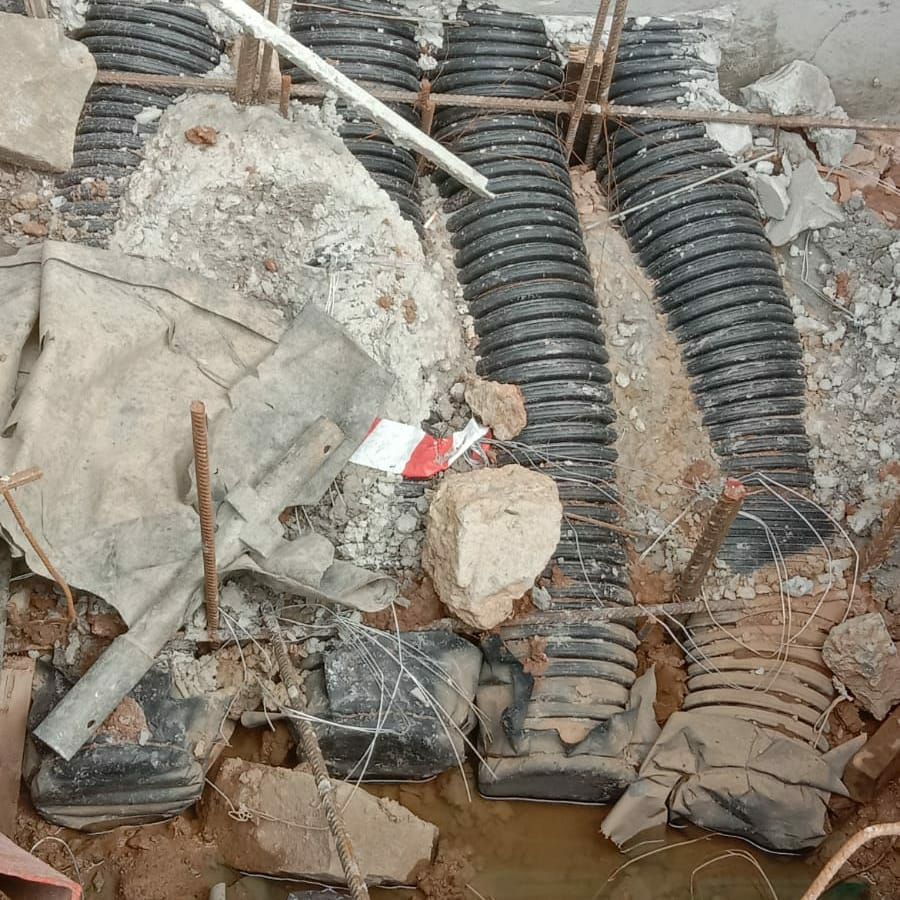
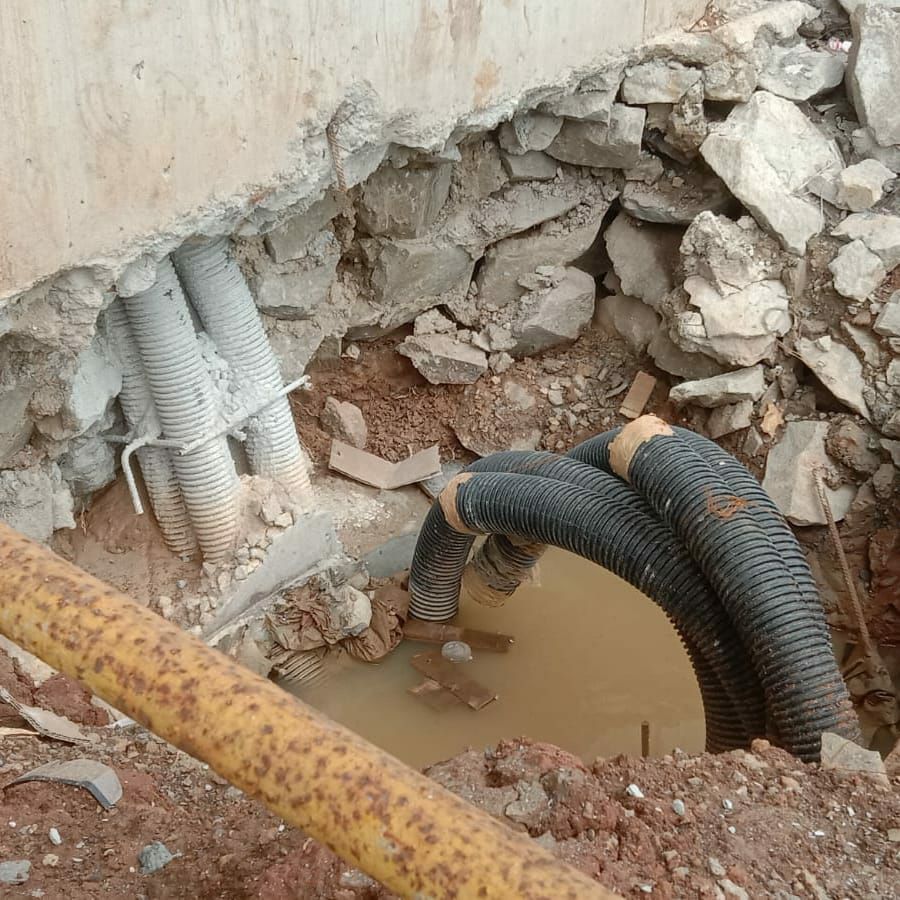
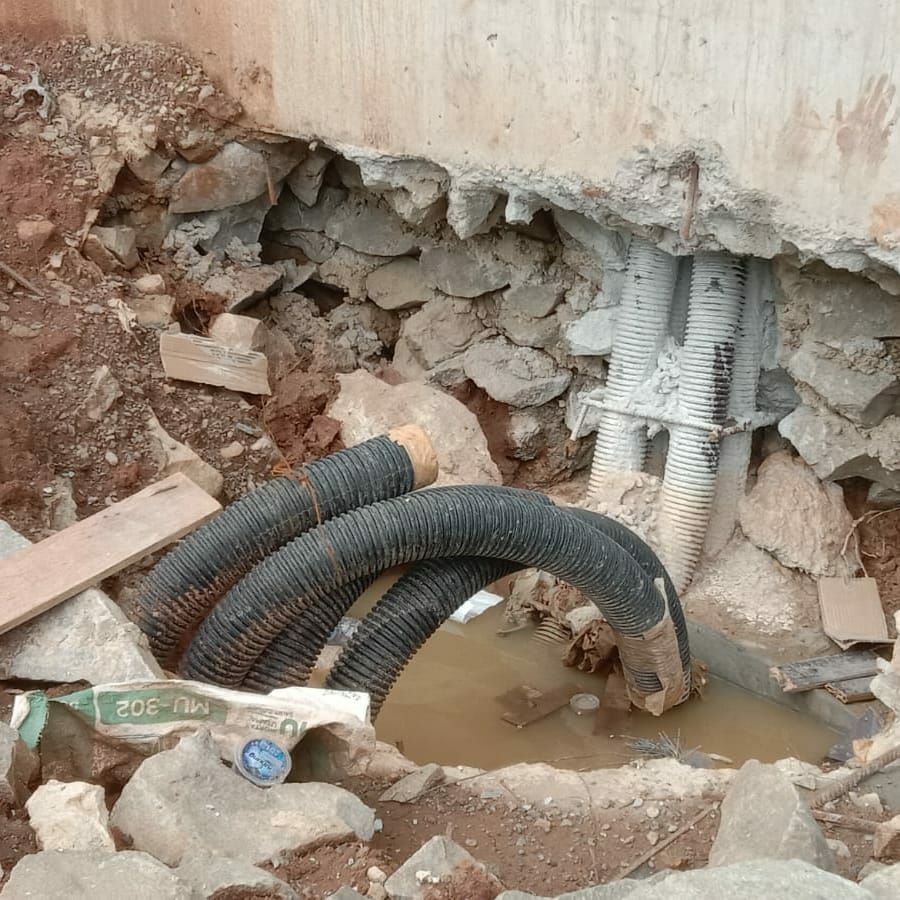
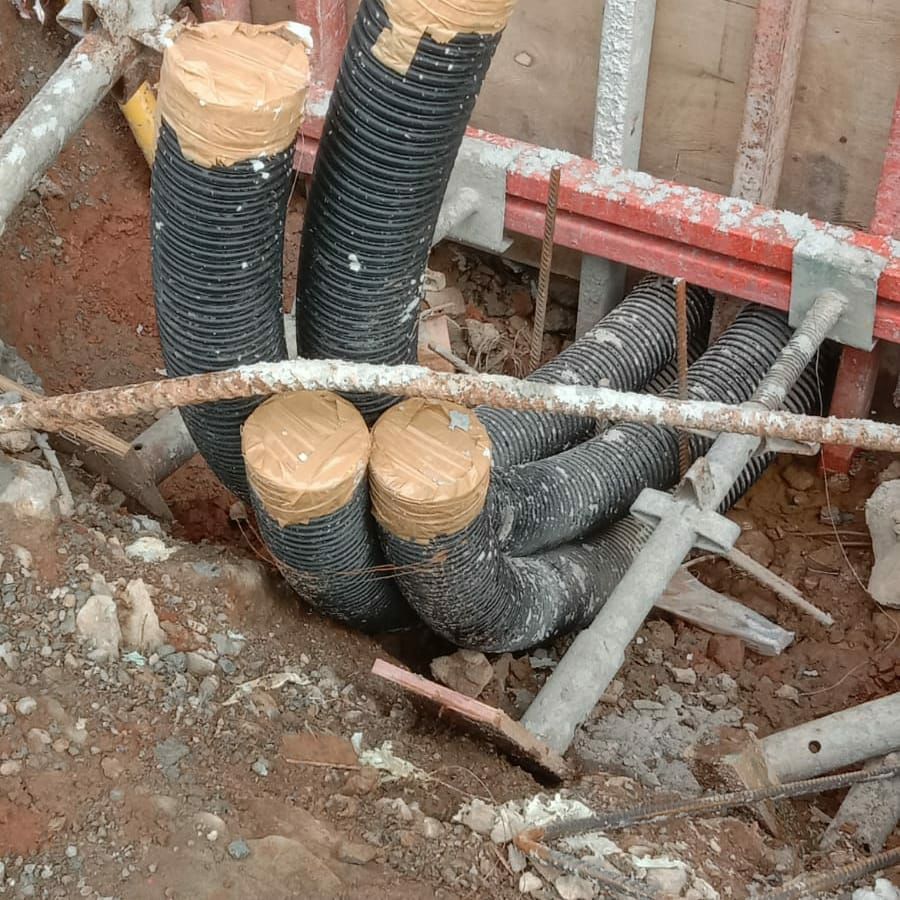
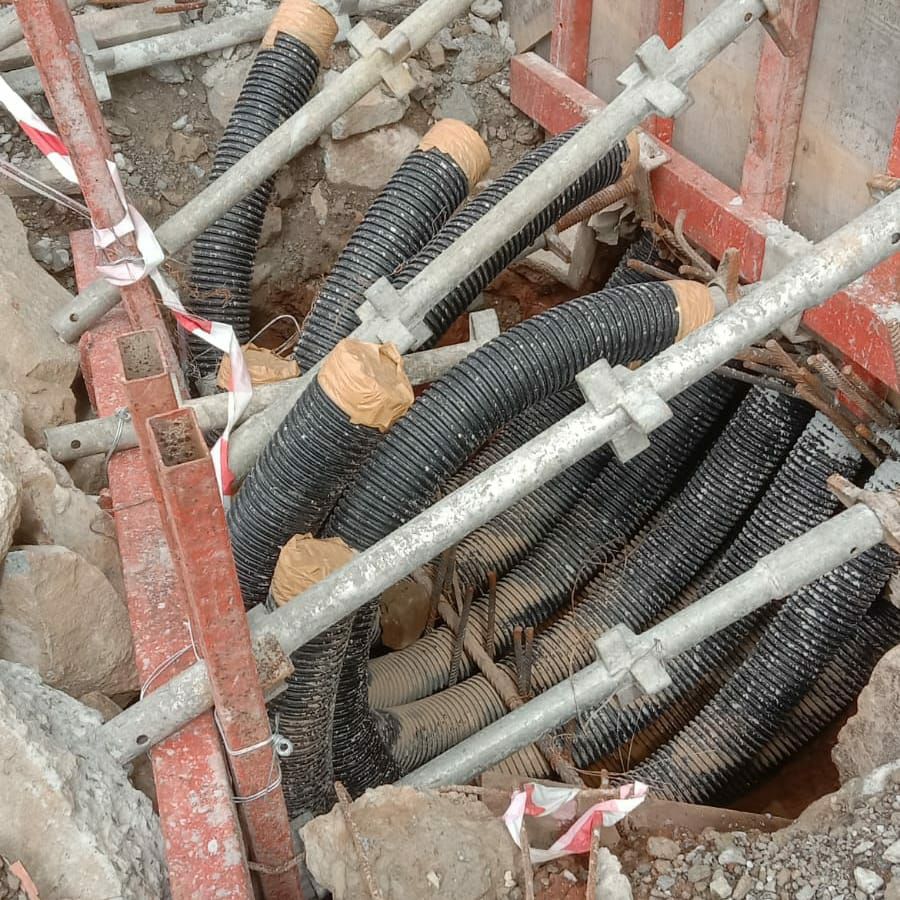
HDPE SINGLE WALL CORRUGATED ID100 ID200 FOR CABLE PROTECTOR
HDPE SINGLE WALL CORRUGATED ID100 ID200 FOR CABLE PROTECTOR
Desember 27, 2021


by admin
WHY CHOOSE SHUANGLIN HDPE SPIRAL PIPE #part 5
HIGH FLEXIBILITY AND RING STIFFNESS
In general, long-term deflections of no more than 5% are often asked of commercially available materials to prevent the tube section from losing its circular shape and cracking of the liner or inner layers. In the case of HDPE high-density polyethylene pipes, these drawbacks will not take place at any degree of deflection, since the material does not crack, its entire mass is inert and its molecular fusion joints maintain their properties.
The ductile properties of HDPE and the structural capacity of the pipe will not be affected by large deformations. The elastic properties of the HDPE allow the formation of curves, between a certain range of values of the radius of curvature, to make adjustments on site, without presenting dents or localized collapses, avoiding in these cases the need to resort to the inclusion of elbows or special pieces.
Ring Stiffness is a measurement ability of a pipe to resist circumferential deformation (KN/m2).
The good thecnology and the best reasearch base standar production EN13476-3 DIN16961 and the ring stiffneess ISO9969, we put out SN2, SN4, SN8.
As seen in the table 1.
TABLE 1. SPECIFICATION OF RING STIFNESS SPI HDPE SPIRAL PIPE
RING STIFFNESS LAB TESTING
LIFE TIME
The lifetime of the SPI HDPE SPIRAL Pipe System for gravity and low pressure applications is estimated to be 100 years, including a safety margin. Each component is designed for a 50 year full and constant load case. As seen in the graph on bellow.
GRAPH LIFETIME VS STABILITY
Article Source: https://www.krahusa.com/krah-technology
Write, Edit, Upload : Evi, PT Shuanglin Pipe Indonesia
Desember 20, 2021
by admin
WHY CHOOSE SHUANGLIN HDPE SPIRAL PIPE #part 4
HIGH CHEMICAL RESITANCE
HDPE high-density polyethylene is one of the most resistant materials to the majority of chemical compounds that appear in pipes, including H2SO4, HCL, HNO3, H3PO4, SH2, which is the most dangerous element in sewer pipes.
Due to this, HDPE Spiral pipes guarantee their durability without the need for internal and / or external coatings and without any restriction on the magnitude of deformations in the pipe, since, on the one hand, the The material does not crack and, on the other hand, is completely homogeneous and resistant throughout its mass.
HIGH ABRATION RESISTANCE
Abrasion is defined as wear on the surface of one body caused by particles from another body, called an abrasive.
It is a fundamental parameter when defining the field of application of a pipe, since it will determine the use, or not, of different materials. In the case of installations that carry suspended solids, or are unblocked with hydrojet, this property must be evaluated as essential.
Wear depends mainly on four variables:
– The characteristics of the abrasive material (such as its granulometry or its chemical composition)
– The constituent material of the surface (or the constituent surface material)
– The relative speed between the surface and the abrasive material
– The frequency of the solicitation
To determine the resistance to abrasion, the overturning test is performed using the Darmstadt method. This test allows comparing the behavior of different types of pipes. As seen in the graph, high-density polyethylene has the least wear.

Article Source: https://www.krahusa.com/krah-technology
Write, Edit, Upload : Evi, PT Shuanglin Pipe Indonesia
